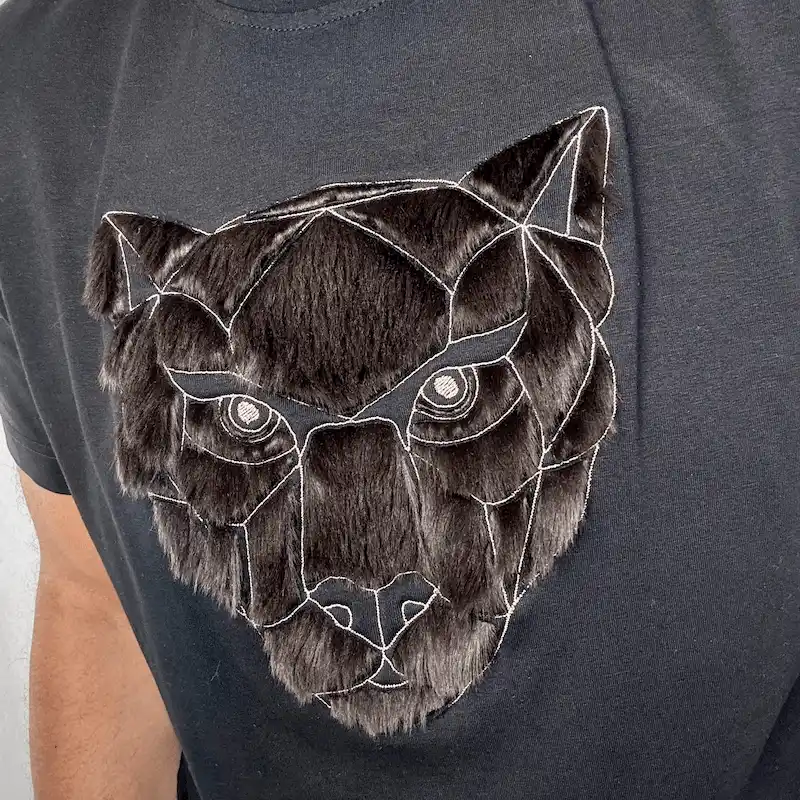
BESTIA was not designed. It was accumulated — layer by layer, decision by decision, over the full depth of the Monolit Method. It is the answer to the question no one asked: what happens when there is no ceiling?
The Decision
Every piece at Migula Studio starts with a constraint. What technique. What surface. What is the correct limit. BESTIA started differently — with the removal of the constraint. The question became: if the method can go this far, what does that look like?
The answer took months. Not because the design was complicated. Because the execution of what the design required had never been done before, and the margin for error in a technique built on hand-tension is zero.
Cloth is not a canvas. It is a material with memory. Every cut changes its structure. You do not go back from that.— Darius Migula
The Technique
BESTIA is executed using the Monolit Method — a form of hand-cut 3D embroidery developed over years of working without the conventional support structures that define standard embroidery work. No interlining. No backing. No stabilising layer.
The front panel and a hand-cut faux fur underlay are stretched together on the same hoop — the underlay beneath, the front panel on top — and the panther is embroidered through both layers at once. Nothing is layered on afterward. The structure is built into the cloth from the first stitch.
The relief comes after. Removed from the hoop, the piece is worked entirely from the underside: excess underlay is trimmed away first, then — by feel, with a blade — the embroidery lines themselves are cut. There is no cut around the panther's outer edge, as in an applique. That absence is what releases the faux fur through the stitched lines and lets the panther exit the surface, to a height of approximately 12–14mm at its highest point. One wrong cut and the piece is unsalvageable.